
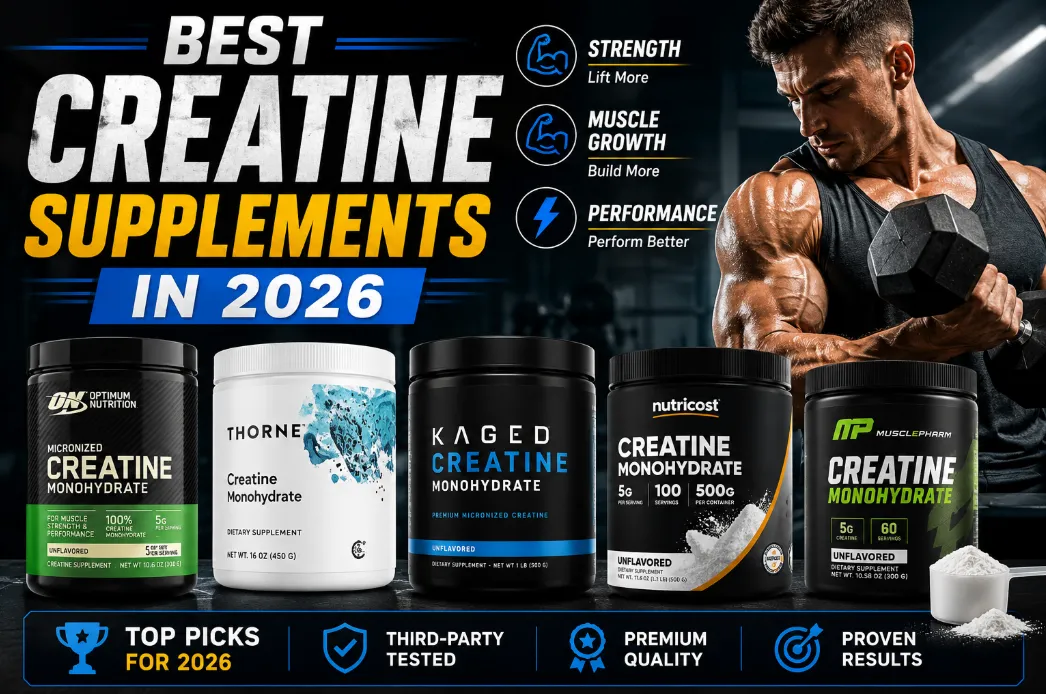
Creatine remains one of the most researched and effective sports nutrition supplements available today. Whether you’re a bodybuilder, athlete, powerlifter, or fitness enthusiast, creatine can help support strength, power output, muscle growth, and overall exercise performance.
As the supplement industry continues to grow, consumers now have access to dozens of creatine products, including powders, capsules, tablets, gummies, and specialized formulations. While this variety is beneficial, it can also make choosing the right creatine supplement challenging.
In this guide, we’ll explore the best creatine supplements in 2026, discuss what makes a quality creatine product, and help you choose the option that best fits your goals.
Why Creatine Is One of the Most Popular Supplements
Creatine is a naturally occurring compound stored primarily in muscle tissue.
Its primary function is to help regenerate adenosine triphosphate (ATP), which serves as the body’s main energy source during high-intensity exercise.
Research has consistently shown that creatine supplementation may support:
-
Strength gains
-
Muscle growth
-
Power output
-
Exercise performance
-
Training capacity
-
Recovery support
Because of its extensive scientific backing, creatine remains one of the most trusted supplements in sports nutrition.
What Makes a Great Creatine Supplement?
Before choosing a creatine product, it’s important to understand the characteristics of high-quality supplements.
Creatine Type
The most important factor is the form of creatine used.
The most common types include:
-
Creatine Monohydrate
-
Micronized Creatine Monohydrate
-
Creatine HCL
-
Buffered Creatine
-
Creatine Nitrate
Among these, creatine monohydrate remains the most researched and widely recommended option.
Third-Party Testing
Look for products that provide:
-
Independent testing
-
Quality verification
-
Ingredient transparency
Ingredient Simplicity
Many of the best creatine supplements contain only creatine and minimal additional ingredients.
Brand Reputation
Choose companies known for:
-
Quality manufacturing
-
Transparent labeling
-
Positive customer feedback
Best Creatine Supplements in 2026
1. Creatine Monohydrate Powder
Best Overall Creatine Supplement
Creatine monohydrate continues to be the gold standard.
Why it ranks first:
-
Most scientifically studied
-
Highly effective
-
Affordable
-
Widely available
For most people, a simple creatine monohydrate powder provides everything needed to support performance goals.
Pros
-
Extensive research support
-
Excellent value
-
Proven results
Cons
-
Requires mixing
-
Less convenient for travel
2. Micronized Creatine Monohydrate
Best for Mixability
Micronized creatine uses smaller particle sizes to improve mixing and texture.
Benefits include:
-
Better solubility
-
Smoother consistency
-
Easier consumption
Performance benefits remain similar to traditional creatine monohydrate.
3. Creatine Gummies
Best for Convenience
Creatine gummies have become one of the fastest-growing supplement categories.
Many consumers choose gummies because they offer:
-
Great taste
-
Easy portability
-
No mixing required
-
Convenient daily use
Products such as QUOR creatine gummies provide a practical alternative for individuals who prefer not to use powders or capsules.
Advantages
-
Travel-friendly
-
Beginner-friendly
-
Easy daily supplementation
Considerations
Always verify the amount of creatine provided per serving to ensure you’re meeting recommended daily intake levels.
4. Creatine Capsules
Best for Simplicity
Capsules remain a popular option for individuals who want:
-
Precise dosing
-
No flavoring
-
Easy storage
Capsules are particularly useful for those who frequently travel or prefer a no-mess supplementation approach.
5. Creatine HCL
Best Alternative Creatine Form
Creatine hydrochloride (HCL) is often marketed as:
-
Highly soluble
-
Easier on digestion
-
Effective at smaller doses
Although many users enjoy creatine HCL, research supporting superior performance benefits compared to monohydrate remains limited.
6. Buffered Creatine
Best for Specialized Preferences
Buffered creatine products attempt to improve stability through pH adjustments.
Potential benefits include:
-
Alternative formulation
-
Reduced digestive concerns for some users
However, current research has not consistently demonstrated significant advantages over creatine monohydrate.
Creatine Supplement Comparison
|
Supplement Type |
Best For |
Research Support |
|
Creatine Monohydrate |
Overall Performance |
Excellent |
|
Micronized Creatine |
Mixability |
Excellent |
|
Creatine Gummies |
Convenience |
Excellent (when dosed properly) |
|
Creatine Capsules |
Simplicity |
Excellent |
|
Creatine HCL |
Solubility |
Moderate |
|
Buffered Creatine |
Alternative Option |
Limited |
How Much Creatine Should You Take?
Most research supports a maintenance intake of:
3–5 grams per day
Many consumers choose to:
-
Take creatine daily
-
Maintain consistent intake
-
Stay properly hydrated
Consistency matters more than exact timing.
When Should You Take Creatine?
Research suggests that daily consistency is the most important factor.
Common timing options include:
Before Workout
Popular among athletes seeking pre-training supplementation.
After Workout
Frequently combined with post-workout nutrition.
Any Time of Day
Many users simply choose the most convenient time.
The key is maintaining adequate muscle creatine stores over time.
Who Should Consider Creatine Supplements?
Creatine is commonly used by:
Bodybuilders
To support:
-
Strength
-
Muscle growth
-
Training volume
Athletes
To improve:
-
Explosive power
-
Sprint performance
-
High-intensity exercise capacity
Fitness Enthusiasts
To enhance workout performance and training consistency.
Beginners
Creatine is often one of the first supplements recommended to new gym-goers because of its extensive research support.
What to Avoid When Buying Creatine
Proprietary Blends
Choose products that clearly disclose creatine content.
Overpriced Formulas
Many premium-priced formulas offer little advantage over standard creatine monohydrate.
Unrealistic Marketing Claims
Be cautious of products promising:
-
Instant muscle growth
-
Guaranteed results
-
Extreme performance gains
Quality supplements focus on transparency rather than exaggerated claims.
Frequently Asked Questions
What Is the Best Creatine Supplement?
For most people, creatine monohydrate remains the best option due to its extensive scientific support, affordability, and effectiveness.
Are Creatine Gummies Effective?
Yes. Creatine gummies can be just as effective as powders or capsules when they provide sufficient creatine per serving.
Is Creatine Monohydrate Better Than Creatine HCL?
Research currently favors creatine monohydrate because it has been studied more extensively.
How Long Does Creatine Take to Work?
Most users begin noticing performance-related benefits within several weeks of consistent use.
Can Beginners Take Creatine?
Yes. Creatine is widely used by both beginners and experienced athletes.
Final Thoughts
The best creatine supplement ultimately depends on your lifestyle, preferences, and fitness goals. For most individuals, creatine monohydrate remains the top choice because of its proven effectiveness, affordability, and extensive scientific support.
However, alternative formats such as creatine gummies, capsules, and micronized powders continue growing in popularity because they offer added convenience and flexibility.
Regardless of which product you choose, consistency is the key to success. By selecting a high-quality creatine supplement and maintaining a regular intake, you can support strength, power, muscle growth, and overall athletic performance for years to come.
